Baby Flat Head (Plagiocephaly): Signs, Causes & Treatment
Baby flat head (plagiocephaly) affects nearly half of babies. Learn the causes, severity levels, and how a pediatric PT can help — from Dr. Kristi Brelsford.

By Dr. Kristi Brelsford, pediatric physical therapist and founder of The Village SLC
Baby flat head, also called plagiocephaly, is one of the most common things I see in babies. If the flattening is on the side, making a slant in the back, that’s what plagiocephaly means.
Plagiocephaly, is that a dinosaur?
Plagiocephaly is the most common version of flat head syndrome, where the baby’s skull has atypical flattening on one side.
How common is baby flat head?
Research shows plagiocephaly is found in 46% of babies — almost half!
(Mawji et al., 2013 — full citation in the references below)
Why does it happen?
Lots of reasons!
Some reasons are completely out of our control. For example, positioning in their mother’s womb. When babies are crowded in the womb, they are more likely to have plagiocephaly when they are born. For example, bigger babies, multiples like twins or triplets, babies from first pregnancies because the uterus may be tighter.
Other uncontrollable factors are birth related, such as birth trauma and assisted deliveries (use of a vacuum or forceps).
These factors cannot be changed, but another BIG reason that babies have flat heads is positioning after birth! The biggest factor in our control is the use of containers. A container is a piece of equipment where a baby is placed, where their movement is limited and they are kept in a specific position.
Examples of containers are strollers, baby loungers, swings, bouncers, high chairs, car seats (when not used for transportation), exersaucers, standing walkers/jumpers.

Is there a range of plagiocephaly?
Yes, there is a wide range!
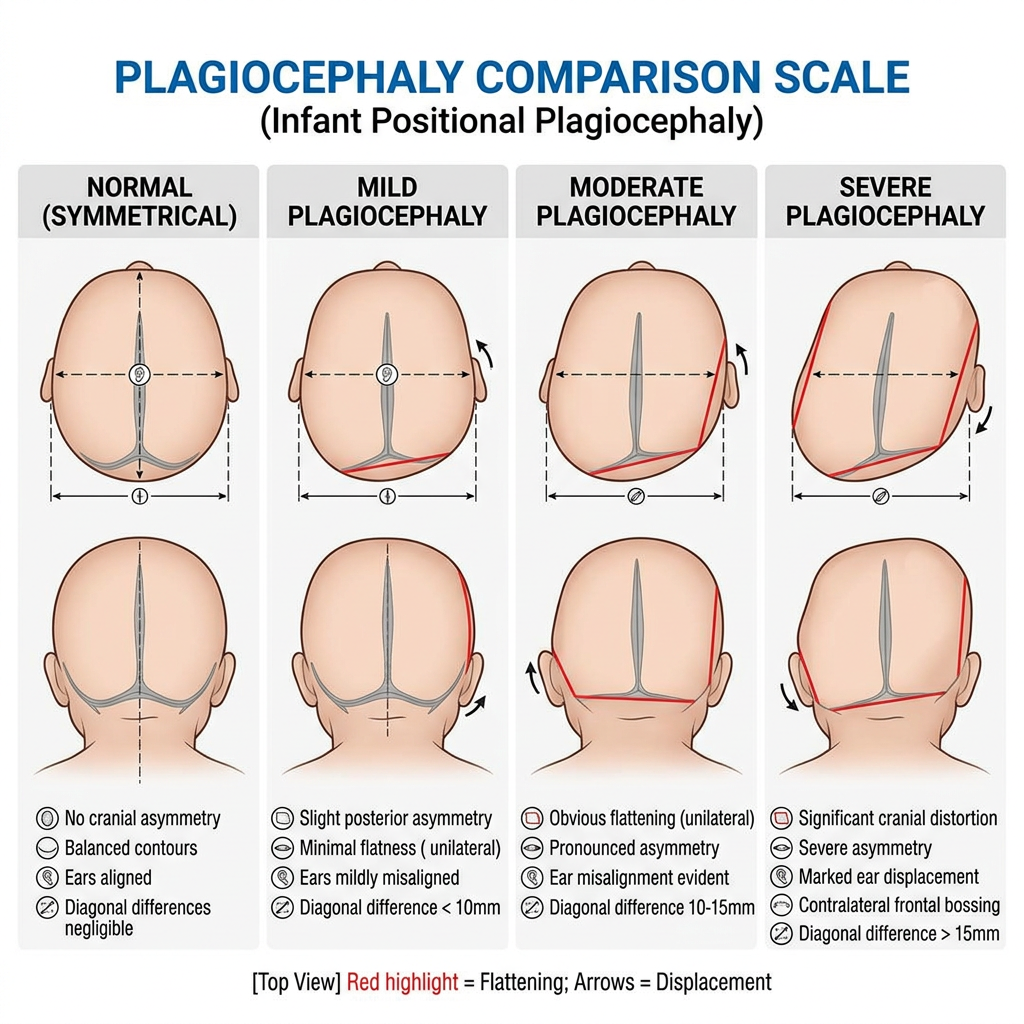
With mild plagiocephaly, only one side of the back of the skull is affected. Mild may not be obvious to the untrained eye, however mild plagiocephaly can become moderate fairly quickly depending on how young the child is.
With moderate plagiocephaly the flattening affects the back of the skull on one side and also the front such as the forehead or shifting the ears.
Severe plagiocephaly affects the back and front of the skull, and can significantly affect facial symmetry and cause severe ear shift.
Why should I care if my child’s head is flat?
For mild flattening, you may not care, and that’s ok! However, if plagiocephaly is moderate or severe, it can potentially have lasting impacts to your child’s strength, posture, balance, coordination and development.
It is important to notice mild flattening because it can change to moderate or severe fairly quickly (especially if the infant is young). A baby’s skull is very malleable when they are born (for the head to be able to pass through the birth canal), so shape can be impacted greatly when they are young and less easily changed when the skull start to harden. Before 4 months old positioning can have a huge impact on head shape!
For moderate to severe flattening, lots of things could be going on which is why we recommend a full whole-body evaluation. Significant flattening on one side, can lead to changes in ear, eye and jaw positioning, which can impact feeding. It can also lead to the child naturally holding their head one direction, neck tightness, and potentially torticollis developing. Asymmetrical head and neck positioning, can make one hand or foot easier to use, which can make one side of the body stronger than the other. Asymmetrical strength, often leads to gross motor milestone delay, altered movement patterns and weakness on one side of the body, which can impact balance and coordination.
What do I need to do as a parent if I notice head flattening?
Please try to keep your baby off their flat spot as much as possible while they are awake. For example, supervised floor play like tummy time and baby wearing are great tools to keep your baby off the back of their head.
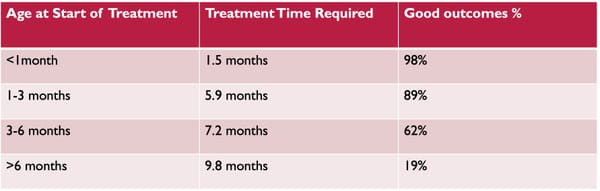
The second step is to see a pediatric physical therapist as soon as possible. They will perform a full evaluation and give you a full plan of care that addresses any and all issues. The younger your child is when they come to a physical therapist, the easier and faster treatment is for plagiocephaly!
What to know about plagiocephaly treatment?
Plagiocephaly can be improved, and in some cases even reversed with physical therapy! Depending on the severity of the plagiocephaly and the age of the child, the plan of care will look different, so reach out to a provider for an evaluation. If you are in the Salt Lake Valley, I offer in-home visits and would love to work with you — reach out to get started!

Quick answers for parents
How common is plagiocephaly?
Research shows positional plagiocephaly affects about 46% of babies, almost half (Mawji et al., 2013).
What causes a flat spot on a baby’s head?
Positioning in the womb, birth-related factors, and, the biggest factor parents can control, time spent in containers like swings, loungers, and car seats.
What should I do if I notice head flattening?
Keep your baby off the flat spot while awake using tummy time and baby wearing, and see a pediatric physical therapist as soon as possible. The younger the baby, the faster treatment usually is.
References:
Mawji A, Vollman AR, Hatfield J, McNeil DA, Sauvé R. The incidence of positional plagiocephaly: a cohort study. Pediatrics. 2013;132(2):298-304. doi:10.1542/peds.2012-3438
https://www.choosept.com/guide/physical-therapy-guide-container-baby-syndrome
https://www.aap.org/en/news-room/campaigns-and-toolkits/safe-sleep
McCarthy MJ, Phelan A, Gu G, Stamer D, McIntyre JK, Lalikos JF. Abstract 70: Evaluation of Cephalic Index Norms After the Back to Sleep Campaign: An Epidemiologic Study. Plast Reconstr Surg Glob Open. 2019;7(4 Suppl):50-50. Published 2019 Apr 29. doi:10.1097/01.GOX.0000558344.65230.03
Sargent B, Coulter C, Cannoy J, Kaplan SL. Physical Therapy Management of Congenital Muscular Torticollis: A 2024 Evidence-Based Clinical Practice Guideline From the American Physical Therapy Association Academy of Pediatric Physical Therapy. Pediatr Phys Ther. 2024;36(4):370-421. doi:10.1097/PEP.0000000000001114
Disclaimer: The information on this account is for educational purposes only and is not medical advice. Viewing or interacting with this content does not create a therapist-patient relationship. Every child is unique, and individualized recommendations require an appropriate evaluation. Always consult your own healthcare provider for concerns about your child and seek immediate medical care for emergencies.