Signs of Torticollis in a Baby: Treatment & When to See a PT
Wondering about the signs of torticollis in a baby? Here's what to look for at each age, plus how physical therapy treatment works and when to reach out.
By Dr. Kristi Brelsford, pediatric physical therapist and founder of The Village SLC
Have you noticed your baby always turning their head the same direction or tilting their head in photos? Here’s how to spot the signs of torticollis in a baby, and what to do next!
What is torticollis?
Torticollis is a postural condition often noticed shortly after birth, involving tightness in the neck. Most commonly, the head turns one direction and the chin is tilted in the opposite direction.
Types of torticollis
There are multiple types, but the most common type with infants is congenital, so I will focus on Congenital Muscular Torticollis (CMT) and refer to this as ‘torticollis’.
So, torticollis is just a neck problem?
No, the whole body is connected! Often, if the neck is tight, it affects the whole body down the chain. Depending on how long the tightness has been there, (for example sometimes the baby has been in a certain position in-utero, they may have been in a similar position for a very long time) the child can have significant asymmetrical tightness throughout the body.
Why does tightness matter?
Babies learn by play and practice. If the baby’s right side of their neck is super tight, they will start lifting their right shoulder, then sometimes scrunch their right side and lift their right hip, eventually making the whole right side tight.
If reaching with one hand is easier because that side is less tight, they will start using one side much more because it is easier and more comfortable. Movement and strength are reinforced by the muscles that are used and practiced. If you never use a certain muscle group, it will get weaker. Use it or lose it!
How long is torticollis treatment with physical therapy?
It depends! Length of treatment depends on lots of factors, including the infant’s age when starting physical therapy, the severity of the torticollis, and if other factors are present (such as plagiocephaly, other head flattening, a mass, etc).
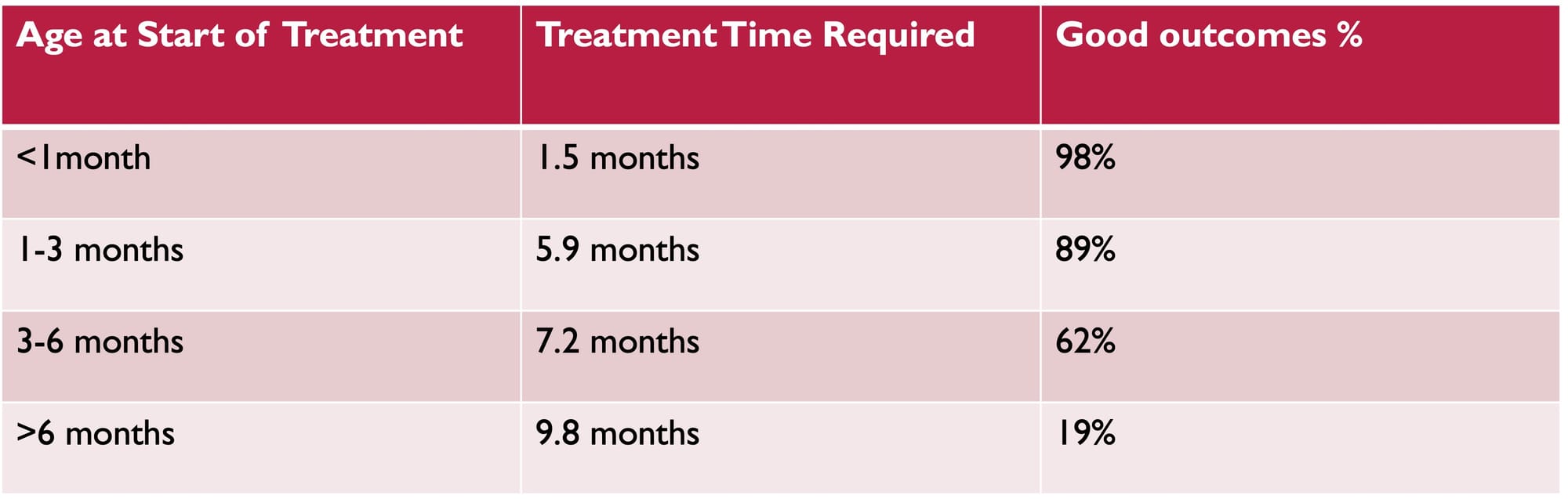
Petronic et al found the younger the infant is at start of physical therapy treatment, the shorter duration of treatment time is required.
Signs of Torticollis in a Baby, by Age:
Younger babies (0-4 months):
- Baby always turns head the same direction
- Baby has head tilt in photos
- Flat spot on side or back of head
Older babies (5-12 months):
- Can only roll one direction
- Always only uses one hand for play
- Only goes up/down stairs with one leg always leading
- Crawls with one leg up and ‘scoots’
What to do if I notice these things?
Reach out to a pediatric physical therapist as soon as possible!
Physical therapy treatment is highly effective for torticollis and is faster and shorter the younger the child starts therapy! A full evaluation is recommended to ensure everything that is connected and affecting your baby gets addressed. If you are in the Salt Lake Valley, I offer in-home visits and would love to work with you — reach out to get started!
Encourage your baby to use both sides of their body:
For example, if your child only plays using one hand, give them toys to their other hand and encourage them to use their non-preferred hand.
Encourage symmetrical movement:
For example, if your child always looks to the right, start placing interesting objects and talk to your child on the left hand side where they have to turn their head towards the left or non-preferred side.
For example, help your child roll the way that is more difficult for them.
Quick answers for parents
What is torticollis in babies?
Torticollis is a postural condition involving neck tightness, usually noticed shortly after birth. The head typically turns one direction while the chin tilts the opposite way.
What are the signs of torticollis in a baby?
In younger babies: always turning the head the same direction, a head tilt in photos, or a flat spot. In older babies: rolling only one way, playing with only one hand, or always leading with the same leg.
How long does torticollis treatment take?
It depends on the baby’s age when starting therapy, the severity, and other factors like head flattening. The younger the infant starts physical therapy, the shorter treatment usually is.
References:
Sargent B, Coulter C, Cannoy J, Kaplan SL. Physical Therapy Management of Congenital Muscular Torticollis: A 2024 Evidence-Based Clinical Practice Guideline From the American Physical Therapy Association Academy of Pediatric Physical Therapy. Pediatr Phys Ther. 2024;36(4):370-421. doi:10.1097/PEP.0000000000001114
Petronic I, Brdar R, Cirovic D, et al. Congenital muscular torticollis in children: distribution, treatment duration and out come. Eur J Phys Rehabil Med. 2010;46(2):153-157.
Pediatricapta.org/clinical-practice-guidelines/Congenital-Muscular-Torticollis.cfm
Disclaimer: The information on this account is for educational purposes only and is not medical advice. Viewing or interacting with this content does not create a therapist-patient relationship. Every child is unique, and individualized recommendations require an appropriate evaluation. Always consult your own healthcare provider for concerns about your child and seek immediate medical care for emergencies.