Newborn Development Tips From a Pediatric Physical Therapist
Newborn development tips from a pediatric PT and mom: skin-to-skin, vision, floor time, baby wearing, and postpartum self-care.

By Dr. Kristi Brelsford, pediatric physical therapist and founder of The Village SLC
Tummy time can start right away!
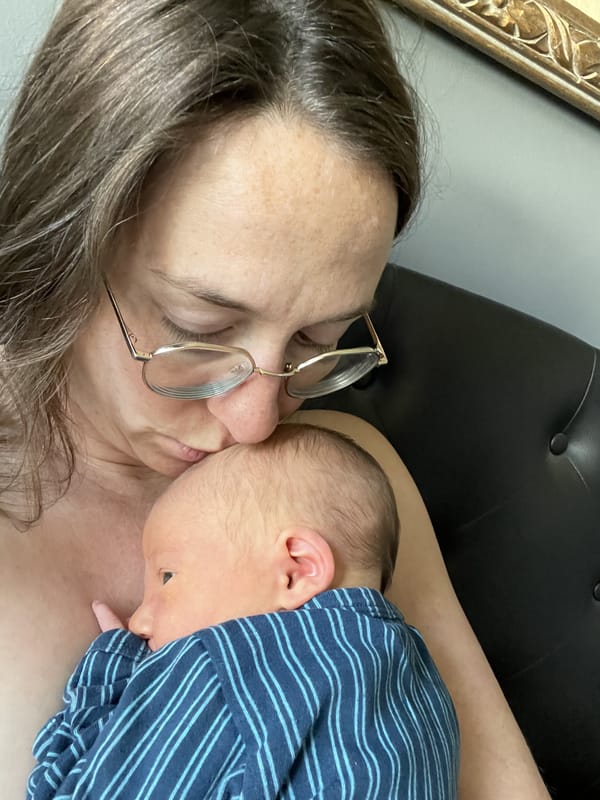
I started tummy time with my baby in the hospital positioned chest to chest almost immediately after birth. Chest to chest is a great way to start tummy time. As long as baby is off the back of their head and has the chance to practice lifting their head against gravity, this counts as tummy time in my opinion.

Once I got home from the hospital, I started other versions of tummy time. I recommend starting with tummy time gradually while your baby is awake and supervised, on an elevated surface (like your chest or a blanket rolled up under baby’s chest) to make holding up their head easier. This is a new skill and needs to be gradually learned, I usually start with a few minutes (2-5 minutes), a few times per day (2-3 times daily). Then slowly working up to a goal of 30 minutes of tummy time per day by 8 weeks old (short intervals add up!).
Why does “skin to skin” matter?
What is “skin to skin”? It is placing baby on your chest, with their skin and your skin exposed. This can be done on baby’s tummy or on their side.
Skin to skin has tons of benefits, it can:
- Increase bonding
- Soothe your baby
- Boost mom’s milk supply
- Reduce chances of postpartum depression
- Improve baby’s health (regulates baby’s heart rate, breathing and temperature)
Tips for bonding with your baby!
- Talking to your baby (can narrate your day so they learn your voice and get exposed to more language)
- Cuddling and holding your baby
- Singing and reading to your baby
Visually engage with your baby
- Baby’s vision is still maturing. When full term newborns are born, they can see about 8-10 inches away from their face (about breastfeeding distance).
- Most newborns and young babies prefer faces to toys. Encouraging your baby to focus on your face and slowly moving your face side to side to give baby opportunities to practice vision development.
- Mirrors can be a great tool for newborns to engage with their own face or you can both make silly faces in a mirror together.

Newborns cannot see all the colors yet, so high contrasting colors such as black and white are most helpful at this stage. I love using high contrast cards, toys or books for babies to look at. Red is typically the next color to incorporate after black and white.
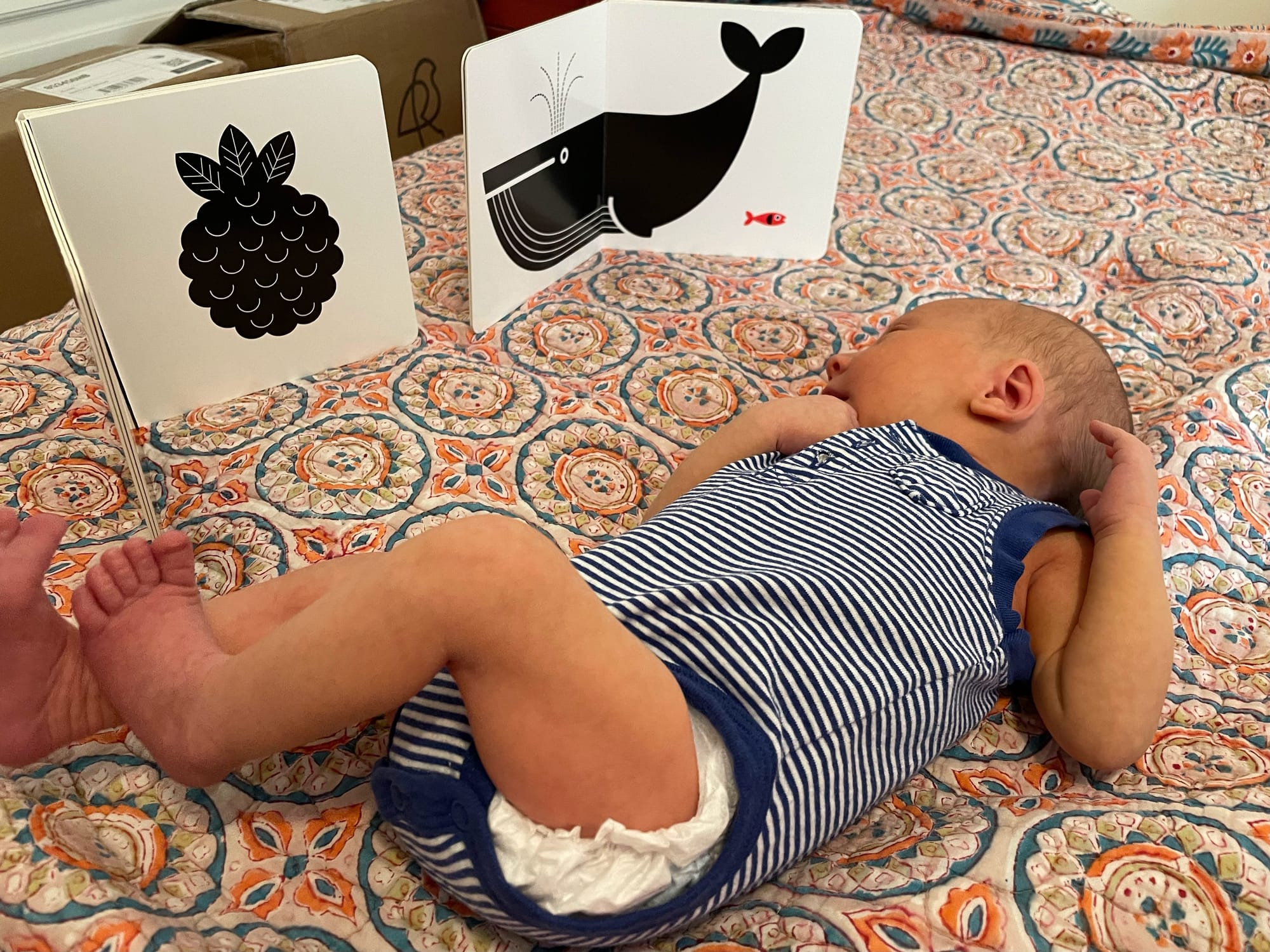
Eyes start to work together more consistently around 3 months. Visual focus and tracking should improve around 3 months.
Give baby free floor time to move!
- Babies have lots of extraneous movements and have to practice and move to learn how to coordinate their body.
- Babies get deep pressure sensory input from tummy time on the floor, which can be a helpful tool for learning to move, to activate their muscles while pushing against the solid floor surface.
- Gravity is heavy! Babies need to practice holding their body and head up against gravity in different positions. Practicing free movement helps them get stronger, improve coordination and learn about their environment. Movement helps babies to thrive.
- Supervision and baby-proofing is essential for safe baby floor play.
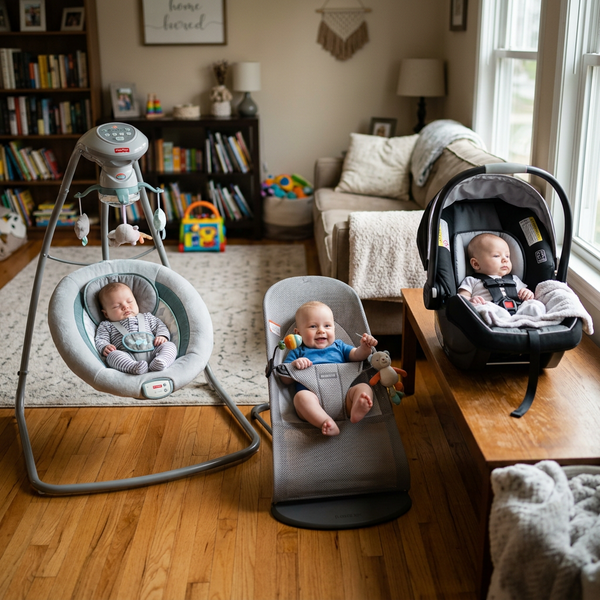
Limit time in containers
- Containers can be any piece of equipment a baby is placed in and kept in a certain position.
- Strollers, bouncers, exersaucers, docATots, baby loungers, jumpers, swings, car seats (when not used for transportation), bumbo seats, and high chairs are all containers.
- Containers are not all bad! Sometimes mom needs to cook dinner or go to the bathroom! If your baby loves playing in a swing, this can be a helpful tool to keep them occupied and safe while you need to do something else. If you understand that containers limit your baby’s movement and keep them in a certain position (as all containers do), then you can use them sparingly and provide opportunities for free movement and floor play time too.
- Baby wearing is also a great option in the newborn phase for your baby to be in a safe place that is not a container. Baby wearing has tons of benefits for you and baby! Baby wearing needs to be done in specific ways with size and fit to make sure baby is safe. This is especially important in the newborn phase when babies do not have head control and their airway can be easily blocked by positioning. There are too many details to share specifics in this blog post, researching safety and ensuring appropriate size and fit are essential before wearing your newborn. Ensure baby is always positioned safely while baby wearing. I plan to have a separate blog post about baby wearing safety and specifics.

Change up baby’s play positions
Help your baby encounter the world from different perspectives! They need to move their body differently against gravity in different positions.
- On their tummy
- On their back
- On their sides
- Supported upright
Newborns sleep a ton!
Try not to stress about fitting in a ton of developmental activities during every wake window. A mom needs to shower and eat and sleep too! As a mom myself, I know it is hard to fit everything in, so try to do your best and ask for help when you need it!
Take care of yourself!
Your baby needs you! Postpartum is not an easy time. Try to give yourself grace as you are transitioning into this new phase with your little one!
If you are in the Salt Lake Valley, I offer in-home newborn and infant PT visits and would love to work with you — reach out to get started!
References:
Widström AM, Brimdyr K, Svensson K, Cadwell K, Nissen E. Skin-to-skin contact the first hour after birth, underlying implications and clinical practice. Acta Paediatr. 2019;108(7):1192-1204. doi:10.1111/apa.14754
https://www.aao.org/eye-health/tips-prevention/baby-vision-development-first-year
pathways.org
Disclaimer: The information on this account is for educational purposes only and is not medical advice. Viewing or interacting with this content does not create a therapist-patient relationship. Every child is unique, and individualized recommendations require an appropriate evaluation. Always consult your own healthcare provider for concerns about your child and seek immediate medical care for emergencies.